
Hyperautomation in ERP: Building a Touchless, Intelligent Business
How BPM, AI, RPA, and orchestration work together to move ERP from reactive automation to proactive, end-to-end execution.
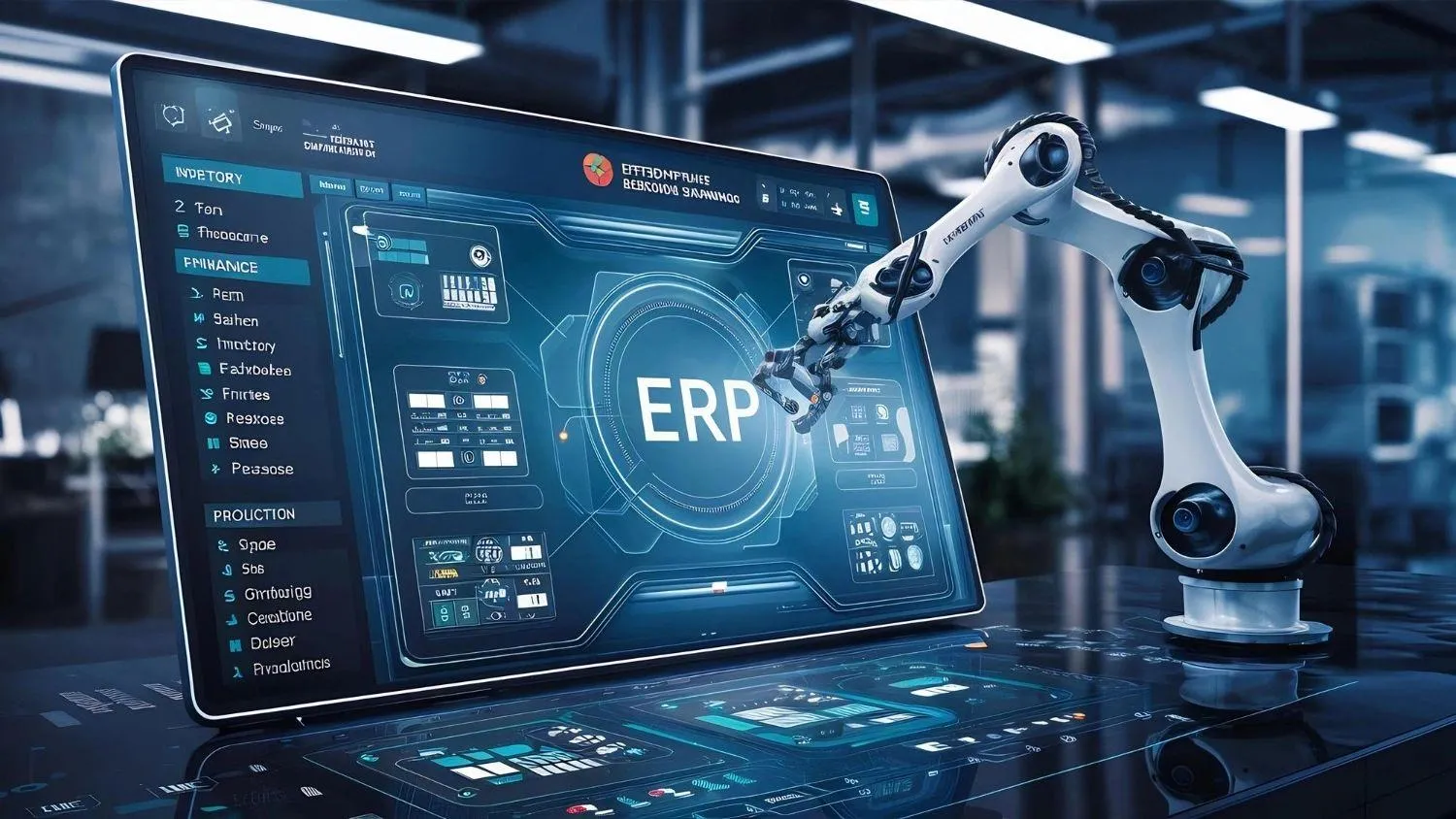
Building a Touchless, Intelligent Business
ERP systems have become the central nervous system of business in recent decades. They help businesses run smoothly and let employers scale up with confidence.
The automation process is where repetitive tasks once done by humans get handled by software. Hyperautomation goes a step further — it's infused into ERP solutions to automate almost all the necessary tasks, reducing human intervention wherever possible.
Automation and Hyperautomation
Traditional automation is like having muscles that can only do certain repetitive tasks. It needs a lot of human intervention along the way, and it works on rules — when an assigned task falls outside the rule, the automation process fails and needs human attention.
Hyperautomation automates different systems together, so the workflow runs uninterrupted with far less human intervention. This shift lets the business focus on other priorities, moving it from reactive operations to proactive operations.
Layers of Hyperautomation
- BPM (Process Design & Governance)It models complex workflows and ensures every action follows the given rule. It acts like a blueprint, and modelling the work in BPM is essential — it helps decide whether a human, a bot, or AI should perform a given task.
- AIIt provides the "sense" for ERP. It helps the system understand content or a situation, predict outcomes, and support complex decision-making.
- RPAIt handles task automation. These are the muscles that execute heavy work, and when integrated with AI, RPA functions at its best.
- OrchestrationThis is the actual nervous system, sending and receiving signals from the brain. It ensures all data and workflow across the system move at the right pace, and that AI, humans, and bots stay coordinated.
AI and Decision Making
What role does AI play in hyperautomation?
AI and Machine Learning act as the brain of the hyperautomation process — processing large amounts of data to make informed, intelligent decisions rather than just automating simple tasks.
This brain processes large amounts of data and input to make informed decisions. Hyperautomation goes beyond simple task automation into intelligent decision-making, recommending specific actions or optimizing workflows.
This process allows the system to adapt to new situations. Based on the prior knowledge it has gained through AI and ML, it can now make decisions autonomously.
RPA and AI Integration
Robotic Process Automation serves as the muscle that automates routine tasks. It saves a lot of human time and lets the ERP function smartly. When RPA is integrated with AI, it works even smarter — able to handle complex processes from start to finish with minimal human intervention.
Workflow automation is orchestrated to keep every department in a company synchronized. This integration is essential in ERP to keep the data process smooth.
Touchless Execution in ERP
What is touchless execution in ERP?
Touchless execution means a case can be opened, executed, and closed with minimal human intervention, typically achieved through Straight-Through Processing (STP).
In a fast-paced market, requiring human intervention for every activity kills a company's momentum — which is why touchless execution has become essential. This is often achieved through Straight-Through Processing (STP). For example:
- BankingERP analyses provided data sets and helps with automated loan approval or rejection, a process that can be highly automated and needs little human intervention.
- HealthcarePatient records and appointments can be highly streamlined through hyperautomation, reducing unnecessary delays and confusion in getting the best diagnosis.
- RetailHyperautomation predicts demand by analysing market trends, tracks shipments automatically, and ensures good customer support.
Navigating the Friction Points
Hyperautomation comes with core challenges. The three major ones are:
- Data SecurityIn high-velocity data environments, security protocols must be embedded directly into ERP systems.
- Mindset and AlignmentTechnology can be purchased, but a hyperautomation mindset can only be cultivated. That mindset evolves with culture, yet culture remains the ultimate constraint.
- Right ChoiceFinding ERP software that truly suits your business is the toughest part. Simply automating the workflow isn't enough — hyperautomating it according to your specific business needs and goals is what carries the real weight.
Eliminating Human Involvement?
Does hyperautomation eliminate human involvement?
No. Human involvement is reduced significantly, not eliminated — humans remain necessary to manage and supervise the process even as it becomes touchless.
Repetitive tasks are automated, and a few other complex tasks that used to eat up human time are now hyperautomated. Still, humans are necessary in managing the process — even a touchless process always remains under human supervision.
It's a fundamental redefinition of work, blending the strengths of the workforce with the efficiencies of technology. This leads to a kind of "human renaissance" in the 21st century, where humans move from being data gatherers to being value adders in the business.
Build Your Ecosystem with Vivify Technocrats
Hyperautomation in ERP is not just a software purchase — it's a unified automation strategy. It identifies ways to scale automation across the business, and this shift is essential for building business resilience. Task-based automation often fails, but hyperautomation has much higher success rates in building fluid business environments.
Vivify Technocrats provides customised ERP solutions that cater to your business needs. We are technical solution providers based in Chennai, with strong success rates across textile, healthcare, transportation, automation, aviation, and oil and gas and petroleum industries. We excel in the conscious implementation of hyperautomation and in orchestrating your workflow, and our software supports you with proof-of-work.
Hyperautomation is no longer an optional upgrade — it is a critical pillar of your business's digital transformation.
Call to Action
FAQ: Hyperautomation in ERP
A few quick answers to the questions that come up most often about hyperautomation in ERP.
Traditional automation handles certain repetitive, rule-based tasks and fails when work falls outside those rules, needing human help. Hyperautomation links different systems together so the workflow runs uninterrupted, moving the business from reactive to proactive operations.